Steve in Beirut

November 16, 2006

UEL Seminar November 14th


Andrea gave a talk and showed a cut of Samar's film of the Beirut Workshops to a small but really nice group. It took place at the University of East London's super-zoomy Campus in Docklands (above). Those present included Professor Nira Yuval-Davis, Erene Kaptani and Catherine Donaldson from the UEL staff and Jed, Andrea, Samar and I from the Beirut team.

Stas Smagana from the Goldsmith's MA course was also there and made some really good contributions during the discussion after. Both he and Erene have worked with refugees in London. Some areas of discussion:

The value of our making such a short visit.
The differences (or not) of working with refugees/victims of conflict in the UK context and those in their own country.
And the extent to which affected people coming to the UK context build new communities of support...
The need to return to Beirut with a follow up to our pilot project. And how that might be effected.

Later, I talked with Erene about her Playback theatre work and hope to see some of it before Christmas.

November 15, 2006

Video from Hezbollah Victory Celebration


This won't be the final edit but since it's now nearly two months since the event, I thought it best to at least put most of it online for people to get some idea.

Just to remind you: this was on September 25th 2006. In Haret Hreik, Dahieh, South Beirut, Lebanon.

PS. SONIA'S STORY (28TH SEPTEMBER, BELOW) HAS NOW GOT A 5 STAR RATING ON YOUTUBE!!! I HOPE THIS DOES AS WELL...

October 04, 2006

Madrasa in Dahieh

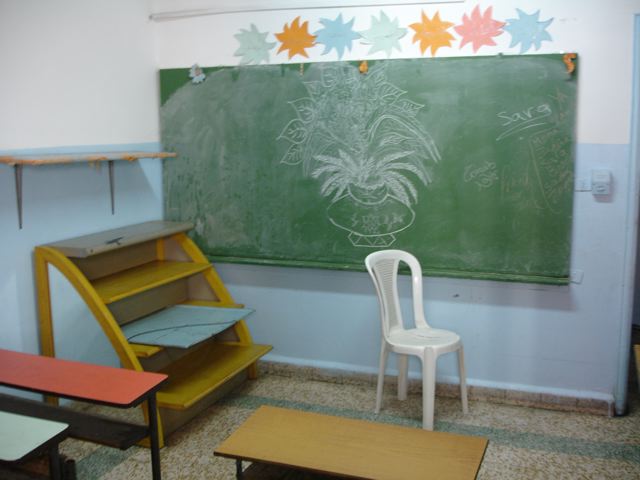
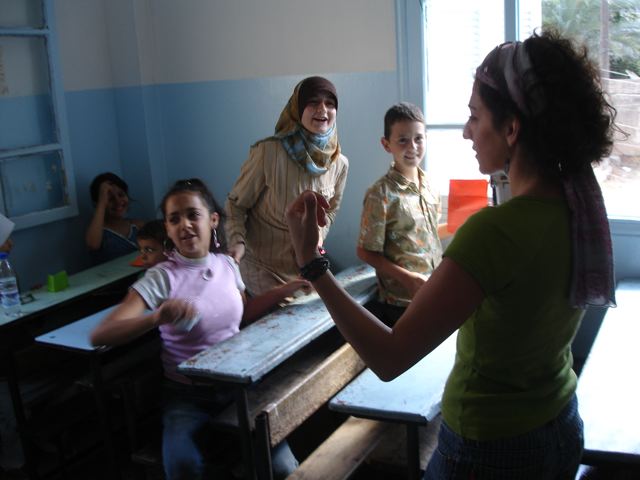
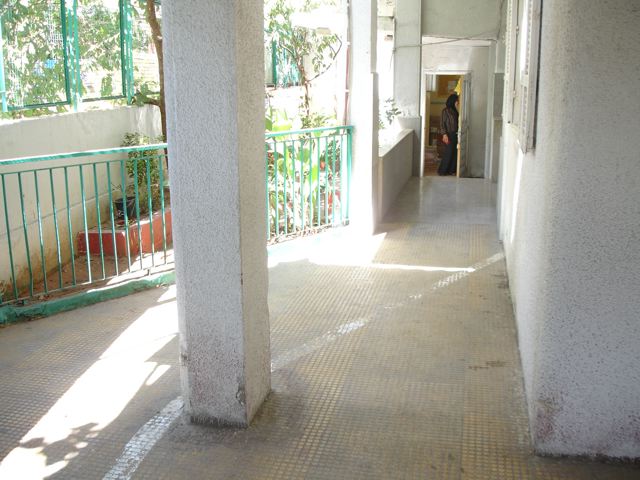
This is the local school where Jeremy and Andrea ran their music and puppet workshops.

I include two pictures snatched hurriedly before they began.

The school was very calm, pretty and had an air of great tranquility. Many of the staff were in evidence the day I was there, getting things ready, cleaning, preparing. But the school was still not operating as a school (on September 20th) as a result of the Israeli invasion and bombing and the refugee crisis it had caused.

As I understand things, 'Back to School' will still be delayed another week or so.


Workshop Gang


This is some of us sitting in the Garden of St Joseph's Church, part of the St Joseph's University. In the background is the Monot Theatre in Ashrafieh. This is a few minutes before we are to go inside and do our first workshop together. Tuesday September 19th at about 1815 pm.

Personnel included in the photo are Mohammed (orange T-shirt), Amina (green top), Hanane (white top), Hanifa (flowery pants), Maarouf (guy with the Pepsi) and Zahraa (black hijab). Can anyone identify the girl in the brown trousers?

Jeremy and Andrea seemed to have sat on an ants' nest...

September 29, 2006

A Few Things


I'm Explaining a Few Things


You are going to ask: and where are the lilacs?
and the poppy-petalled metaphysics?
and the rain repeatedly spattering
its words and drilling them full
of apertures and birds?
I'll tell you all the news.

I lived in a suburb,
a suburb of Madrid, with bells,
and clocks, and trees.


From there you could look out
over Castille's dry face:
a leather ocean.
My house was called
the house of flowers, because in every cranny
geraniums burst: it was
a good-looking house
with its dogs and children.

Remember, Raul?
Eh, Rafel? Federico, do you remember
from under the ground
my balconies on which
the light of June drowned flowers in your mouth?

Brother, my brother!
Everything
loud with big voices, the salt of merchandises,
pile-ups of palpitating bread,
the stalls of my suburb of Arguelles with its statue
like a drained inkwell in a swirl of hake:
oil flowed into spoons,
a deep baying
of feet and hands swelled in the streets,
metres, litres, the sharp
measure of life,
stacked-up fish,
the texture of roofs with a cold sun in which
the weather vane falters,
the fine, frenzied ivory of potatoes,
wave on wave of tomatoes rolling down to the sea.


And one morning all that was burning,
one morning the bonfires
leapt out of the earth
devouring human beings --
and from then on fire,
gunpowder from then on,
and from then on blood.
Bandits with planes and Moors,
bandits with finger-rings and duchesses,
bandits with black friars spattering blessings
came through the sky to kill children
and the blood of children ran through the streets
without fuss, like children's blood.

Jackals that the jackals would despise,
stones that the dry thistle would bite on and spit out,
vipers that the vipers would abominate!

Face to face with you I have seen the blood
of Spain tower like a tide
to drown you in one wave
of pride and knives!

Treacherous
generals:
see my dead house,
look at broken Spain :
from every house burning metal flows
instead of flowers,
from every socket of Spain
Spain emerges
and from every dead child a rifle with eyes,
and from every crime bullets are born
which will one day find
the bull's eye of your hearts.


And you'll ask: why doesn't his poetry
speak of dreams and leaves
and the great volcanoes of his native land?

Come and see the blood in the streets.
Come and see
The blood in the streets.
Come and see the blood
In the streets!

-- Pablo Neruda (writing about the Spanish Civil War) Trans. Nathaniel Tarn,

September 28, 2006

Sonia's Story.

This is Sonia.

I spoke about her in my post of September 25th. It's taken me until now to make a little edited version of my interview with her, conducted in her family flat after the 'Victory Celebration' in Dahieh.

The photograph 'Targeted Apartment Block', in the post below, was taken from her balcony that night too.

In fact, it was the bomb that took down this 13 story block of flats onto the supermarket below that caused all the damage to her own dwelling. She talks about this on the video.

You will hear other voices on the tape. I think they are mainly her mum talking to Hanane in the background. And you can also see her dad in the corridor, at one point, I believe, showing Hanane the damage the bomb caused.

Sonia was at pains to tell me that they still hadn't got the place fully right. The yellow colour of the door jamb, she explained, is only the undercoat! It won't be staying that colour!

The only other thing to say that the whole flat was lit by a couple of low wattage neon strips hung at strategic points around the flat. Once again, a result of the bombing. They were still lacking a lot of their electrics.

September 26, 2006

A Few Choice Targets


Photos:
A young female target.
Targeted apartment block.
A young male target.
Celebrating children target.
Targeted Motorway bridge, Dahieh.

Them - and Us


I'm taking the liberty of posting a comment that appeared on the blog this morning. It's from a friend of mine, Raf and I'm posting my reply here. It might help stimulate some healthy debate. Who knows?

raphaele has left a new comment on your post "Victory Celebration. Dahieh, Beirut":

the pics are great, the very last one could really have been taken on a futball victory ... the women are all covered. and anyway ... and i wonder if your way of telling things (tea, pastery and smiling people) isn't another way of writting propaganda !!! am i going to get censored ? anyway, i'm a desperate case, i'll never be a hezbollah fan whatever you write and say. looking at their leaders paintings is enough to discourage me. i'm going to brussels today, back at the end of the week. Hope to speak to you then.


Of course I'm going to publish it! This is the world of Hassan Nazrullah! We allow everything. Ooops! I've been brainwashed - Help! - maybe it was something they put in those biscuits!

But seriously, Raf, which 'way of telling things' would you prefer? Would you like me to tell it this way: That all these women were secretly unhappy that they were having to wear the hijab? Or, 'in truth', oppressed? That when they got home their arab husbands beat them (because, of course, it's well known that all arab husbands beat their wives) - so all their smiles on the Celebration were really false smiles? Or that many of the people who came to the Celebration, in their heart of hearts, don't actually like Hassan Nazrullah or Hezbollah, but are too afraid to say it? Or that some of the people who came in the coaches Hezbollah organised came because they'd never left their poor little villages and rather fancied a trip to a scruffy bit of wasteland in a poor suburb of Beirut, just to escape the daily wretchedness of their unbearable arab lives? Or that they were forced to come by local Hezbollah thugs, after threats made to their loved ones?

Or that all the children there, dancing around and waving flags, 'knew no better'? That they were just being manipulated - and practically ABUSED - by their parents? Or that even if all the people who were there were there of their own free choice, they don't actually understand what kind of organisation Hezbollah really is? Really. In reality. That, actually, those people we're - actually - just all being hysterical? Because, of course, being arabs, and being poor, and being Muslims, and being black - as near as damn it - they're just badly educated and don't know any better?...

Maybe.... maybe....

But wait a minute. Haven't I heard that all before? Isn't that the Figaro script? Remind me. Or the CNN one? Or the BBC's? Or the Time's? Or the Telegraph's? Or La Stampa's? Or The New York Time's. I forget. And, of course, these august news organisations always know best.... After all, they're not hysterical... they're objective... they're not black .... or arab.... they have The Truth.... despite anything - ANYTHING - that the local people might think or say or feel....

because, of course, WE IN THE WEST KNOW BETTER!! And always do.

Ok. Raf, I'm not pretending I didn't go there with an agenda. Everybody has an agenda. But it's the people who pretend they don't have the agenda who worry me. Particularly when they work for big news organisations.

At least I was there. I chose to go there. By choosing I already have an agenda, sure. But at least I was there on the ground. At least I was talking to ordinary people for four hours. Recording my impressions, however 'agendered' they were. And I'm just giving you one person's impression. Just one person. Isn't even that allowed any more? Not even one person's impression that disagrees with the orthodoxy? With the norm? With The Truth? With Le Monde? Not one? Forgive me. Forgive me for abusing the sacred. Forgive me for abusing the Truth. Forgive me for abusing The Orthodoxy. Confessio. Confessio. Confessio. Mea Culpa.

Raf. Next time come with me to Lebanon. I really hope to go again. And I really hope to go again soon. Come with me to Dahieh. To the Madrasat. To the bombed bridge. To the thirteen storey block of flats that's now a hole in the ground. Come and meet Zahraa with the hijab and the four Mohammeds and Abdullah and Zenaib (also with the hijab) and Hussein and Helen and La Donna and Heba and Ola and Jamal and Hanane and Hanifa and Rami.

And then we can have a good dialogue...

Oh, my god! It must have been something they put in the Lemonade!

September 25, 2006

Victory Celebration. Dahieh, Beirut


Andrea and Hanane and I spend a famous day in Dahieh. But the blog has had to wait a few days until we're back in London to download the photos and video we take. Our cameras were burn hot with the images we see today and we only stop filming when the batteries die.

Also, we realise, when we get home, we've had no electricity for two days (thinking it is just the normal breif outage)but who cares? We shower by candlelight and eat the food hot from the fridge.

So. Dahieh. The Suburb. And its Victory Celebration....

We find a taxi to take us there, thinking it will be quite difficult, seeing on TV before we leave the hundreds of thousands of people converging on the southern districts of Beirut; the photogenic presenters and 'on the spot' reporters of Al Manar describing the mounting excitement.

And our taxi-driver is good.

Practically from the moment we leave Hamra and the centre of town, there are traffic jams, cars, trucks, coaches, buses and threewheelers draped not only in the yellow flags of Hezbollah, but the greens and reds and blacks of other parties and groups. But he knows the back streets, the driver. Keeps taking little diversions. Dodging round the bottlenecks. Avoiding the places where the Lebanese army have parked their tracked armoured vehicles, each topped with a heavy machine gun shaded with camoflage net...

Imagine a demo in London, combine that with the day after Italy won the World Cup and you have an idea: all the cars honking their horns, flags waved from car windows, knots and gaggles of people on foot heading south; south towards the suburb; men, women, grannies, children with their T-Shirts and banners, baseball hats in their various colours, imams and their families, women in jeans or hijab, colourful or in black, pictures of Nazrullah posted on every surface you could post a poster...

And soon, in little more time than it would take to drive there normally, we arrive. At the edge of Dahieh, beneath the central section of a motorway bridge the Israelis had been kind enough to remove, the taxi drops us off and we continue our journey on foot.


This is a 'poor' district, so called, but don't get the idea of some sort of favela. The first streets we walk have cafes and wedding dress shops with names like Ooh La La. Above, people hang from the balconies of flats, six, seven, ten stories high - whole families - with Hezbollah flags, pictures of Nazrullah, images of young men (we presume dead fighters), loadspeakers that are blaring music and speeches, whistles, horns, people shouting. And the whole throng heading steadily, together, inexorably up the street to - who knows where...?

We become aware of the media coverage. Cranes with cameras and their crew perched above our heads. And also generators. Speaker systems. A huge freestanding billboard with a Hezbollah fighter, a 3-D Rocket Launcher superimposed onto his shoulder.Then, Lebanese army guys in their grey, black and green uniforms, their automatic weapons at half mast lining the route. And always the sounds from the demonstration getting closer.

Samar has warned us that their may be hostility. But we find just the opposite. Obviously, we stick out like sore thumbs. Andrea the tall gangly Italian with his granny specs, me with my greying red hair and cameras draped round my neck, but as we progress we are greeted, not with resentment but with smiles and thumbs up, and 'Sprechen Sie Deutch?''Nein, Englisch'and 'You're welcome. You're welcome'. People seem genuinely pleased we've come. To see for ourselves.

Finally, up a little rising dusty street. It's lined with cafes and car repair shops and hairdressers. To a 'checkpoint'. Here we're asked to open our bags and show what's inside. And then, a quick peek in and ... we're through. Into a massive 'square' surrounded by apartments, many of them draped with huge banners like the ones we saw the first time we came to this part of town. One series that sticks in my mind - it is actually the backdrop to the stage where Nazrullah is to speak - each on a separate block of flats is: With FIRE we defend, our EARTH, our AIR and our SEA. The 'fire' one has a Katyuska being launched. The others show various Israelis getting a pasting surrounded by the other elements....

As we make our way through the crowds to a shady spot, once again people see us, smile, say 'you're welcome' and point us out to members of their family or friends who haven't yet noticed us.

At this moment we bump into one of the kids from our workshop. She's here with her mum and two older sisters. The mother looking little older than the older daughters. All in hijab. But not black. Lilacs and smart greys and beiges with swirls of soft patterns and little touches of lace and trimmings to give them the latest feminine looks.

Hanane is the daughter of Nawal's sister Dunya. Hanane speaks french and arabic - she claims not well - and has been living in Paris for the last few years. She's here on a litte trip and to see her brother in Damascus. She and Andrea start to speak to the family. From his rucksack, Andrea pulls photos he's taken and had developed from the workshop earlier. He has one of the girl. She's charmed and of course the mother and sisters all gather round. The other sisters insist on seeing all the other photos and ask if they can have one each of Andrea and I. As souvenirs. Of course, we agree.

All the while we are attracting a crowd and little groups of kids come up and, seeing me with my camera, ask for photos. Soon I've got quite a queue. Each little group jostling to stand there with their flags and their posters and banners and bandanas for the team shot. Then: thumbs up. Done! And the next group assemble.

I turn back. The eldest girl from the family (it turns out later that she's only thirteen) is telling Andrea how she hates America, but not the American people, no, she likes the American people, it's only the government she hates, the American people are kind, she wants to go to America one day. She want to marry in America. She wants to have children there. But what about Mum? Won't she miss her mum? No. No. She'll come back to Lebanon. For visits. But she likes America. The American people are nice....

All this with smiles and English so good that later Andrea remarks that she speaks it better than him...

We move on. Closer to the side of the stage. Nazrullah's speech has begun but, of course, we don't understand. Instead we talk to people. And film them. A guy with a very weatherbeathen face, who has worked in the Gulf with Americans and British on oil and construction. He came back to Lebanon a few years back. He's from Tyre. He's come in a bus today. Organised by Hezbollah. With him his little son, clutched by his arm. I film some of his story.

And then a young woman in fawn dungarees and a T-shirt. You are English? Yes. What do you think of this? Are we terrorists? What do you think of today? What do you think of Hezbollah? Are these all terrorists here?

We say no.

This is Sonia. She has a portrait of Nazrullah on a pendant around her neck. I start to film her but for some reason my camera fails to work. She says a lot of powerful things, so we ask her if, when the Celebration finishes, we can do the filming again. She agrees and also invites us to her house.

We agree.

The speech comes to an end. It's six thirty now. Almost time for prayers. Big cheers from the crowd, topping the cheers and applause that have punctuated Nazrullah's speech. And it's over. Suddenly 800,000 people turn and head for home. A sea of yellow flags, mainly, moving rapidly across the arena, 800,000 pairs of feet throwing up a cloud of dust as they move towards their dwellings.

It's a scene from an epic. The Bible. The Koran. A film. Homer. An army of people on the move, their only weapons, their hearts and minds and hopes for the future. And their yellow flags.

It's been a good day. Hope for them, maybe. Pride, maybe. And something we have heard quite a bit: the sacrifice of the 1300 dead has been worth the 'victory'. They are the fallen. Those who gave their lives for the victory. The babies. The old. The mothers and fathers. And, of course, the fighters.They made the ultimate sacrifice. It reminds me of those memorials you find on English village greens: Soldier of the First World War. Laid down his life. For the Greater Glory.

Who are we, who only fought the Invasion of Lebanon on our television screens or in our newspapers in London, snug in our beds, in our tranquil suburbs, to disagree?

Sonia takes us to her home. It's actually right in the heart of the carnage. From her balcony, she shows us the crater, fifty metres away, all that is left of a thirteen story block of flats above a supermarket.

We meet her mother and father. They tell us their story. Sonia works in Beirut for a bank. In her near perfect English she recounts her early days - twelve years to be exact - under Israeli occupation. About her university education. And how when the current invasion started her family village, her family home, was in the front line. How twenty percent of her village was destroyed. Along with twenty percent of it's inhabitants.

How her next-door neigbour, who were poor, didn't have a mobile phone, didn't have relatives in the north, were obliged to stay in their home. How they were killed and then later the IDF came to the house and threw in bombs. And how the grandfather and mother and their two children were later found. Just pieces of meat in the rubble. Tomorrow it is the 40th day of the burial. Not just of her neighbours, but of the whole village.

Sonia's mum and dad are going back to the village for the mourning - 40 days after a death being a special time for Muslims. She tells us too that though the burial was 40 days ago, not all the people died 40 days ago. Some were murdered much earlier in the war. But before the ceasefire there were no burials. The bodies just lay in the ruins of their homes. In the decimated village.

She tells us too of stuff we've read in our newspapers about people being afraid to stay. And afraid to go. The Israelis were bombing the convoys. First they'd invite a village to leave. Threaten them with death if they did not. And when the convoys set off, with their white flags, they'd bomb them. Yes, she says, of course they were afraid about staying or leaving. But they'd been afraid of the Israelis since she was a child. Nothing new there...

Then she comes to Dahieh. Where the family also have a home. But this is also a target - it's only a hundred metres from a huge building with a corrugated roof where Nazrullah used to give speeches. More Israeli leaflets. More threats to leave. And for a third time they seek refuge elsewhere.

And then the bombs on Dahieh. The ceasefire. The return. This flat where we are now. All it's windows caved in. The furniture inside flung to the far wall, amid broken glass, by the explosions opposite. The internal doors blown off their hinges. A hole in the bathroom wall punched through by a piece of shrapnel that's already crossed the living room.They keep the shrapnel.

Before we arrive, Sonia has apologised for the state of her flat. We don't notice. But then we realise that in the month since the end of the 'war' four-fifths of the damage has been repaired. On the wall in the corridor that now is just a wall, she indicates the size of the hole - as big as a table - that was there just a couple of weeks ago. All the mirrors re-glassed. The picture frames restored. The doorways. The doors. All new.

In fact, the reconstruction is pretty amazing. She tells us this is happening all over Dahieh. On a big and a little scale. How the street outside when she first came back was piled with rubble. How, within three days, Hezbollah had taken it away. But how the government still hadn't managed to show its face

And much of the time as she tells us this, she smiles. But a little later, when the camera is off, I notice she has something in her eyes that she's dabbing with a handkerchief. I have this on video. I will place it here as a document.

We drink tea and lemonade. We are offered biscuits. We drink. We eat.

Sonia offers us a lift to a place near town where we can get a taxi back. We agree but we, in return, invite her to come with us for a 'fruit cocktail', so, in the end we all get back to Hamra together and have mango-juice with every fruit imaginable in a swanky cafe opposite the American University.

Samar and Jeremy join us there.

Later we all go to the Corniche and drink tea and smoke a shisha in a little cafe overlooking the sea. And at about nine Sonia goes home. She's working tomorrow - until one - at the bank. We exchange emails.

Later still, at the artsy Restaurant that Maha's boyfriend has just opened we talk with Abdullah. He's been back in Beirut two years. He had been working in Arts Admin for a big ageny in Paris, but grown tired of it. He's come back to do something 'more worthwhile'. And he feels it's succeeding. He's now working in 'CD-tec' a small but growing outlet for books and music. He tells us he has watched Nazrullah's speech on TV.

Abdullah's is not the general opinion here. Some see only threat in Nazrullah's speech. Samar included. But Abdullah's reading is more nuanced. Yes, Nazrullah's criticised Arab leaders both inside and outside Lebanon. He's talked tough. The stick yes, but also the carrot. Nazrullah's smart. Charismatic. Ironically, says Abdullah, no supporter of Hezbollah, Nazrullah's voice is the radical one. Against the old tribal, feudal loyalties. Against the 'old way'. The old boy's club. The comfortable network of allegences hoping for a quiet life. Hoping the Israelis will go away, leave them in peace so that Lebanon can just be a place where Gulf playboys come for their sex, their naff cars and guilt-free Johnnie Walker.

Nazrullah's offering unity. He's already enlisted to his side General Aoun, the recently returned exile and Christian political outsider, and he's calling for a shake-up. A government of national unity. Otherwise, he says, Lebanon is playing into the Israeli's hands. A strip-Lebanon. A sliced Lebanon. A Lebanon of cantons. Each sectarian. Each divided from the others.... The whole, weak.

We listen intently. We like Abdullah. He seems to talk sense. He seems to talk hope. But most of all he talks politics. We need this. But we're tired and we make no great sense ourselves. Our brains have been scrambled by the immensity of our day. We listen only. Around us the rest of the room is full of chatter about the latest film showing.... Who's in and who's out in the world of Lebanese arts...

Home. Outside the streets are wet. Rain. But no rain cabable of raining on our parade.

A big day. A lot to think about... We wish you'd been here!